

Users struggle to find compatible gaming groups without sifting through chaotic Discord servers.
Safety concerns discourage marginalized gamers from engaging in multiplayer spaces.
There’s a demand for matchmaking based on values, not just skill level.
These insights guided my design decisions, ensuring that Aegis focused on social compatibility, safety, and ease of use.
How might we create a platform that helps casual gamers, especially women and LGBTQ+ players, find safe, inclusive gaming communities by prioritizing social compatibility over skill-based matchmaking and ensuring strong moderation tools?



Many casual gamers—especially women and LGBTQ+ players—struggle to find safe, inclusive gaming communities due to matchmaking systems that prioritize skill over social compatibility. Existing platforms like Discord and in-game matchmaking often expose marginalized players to harassment, exclusion, or overwhelming environments, making it difficult to connect with like-minded individuals.
I designed Aegis, a dedicated platform that helps players find compatible gaming partners and communities based on shared values, communication styles, and play preferences. The goal was to create a safer, more welcoming space for gamers who prioritize social compatibility over competition.
This case study walks through my end-to-end UX design process, covering user research, competitive analysis, information architecture, wireframing, and iteration based on usability insights. This project is nearing completion, and I will be finalizing and presenting it in the next two weeks. While some final refinements are still in progress, the research, wireframes, and key design decisions are in place.
To better understand the problem, I conducted user research and competitive analysis, focusing on three main questions:
What challenges marginalized gamers face when trying to find inclusive communities?
What existing solutions (like Discord) do well and where they fall short?
What features would make a platform feel safer and more accessible?
Using my research findings, I structured Aegis around four core areas:
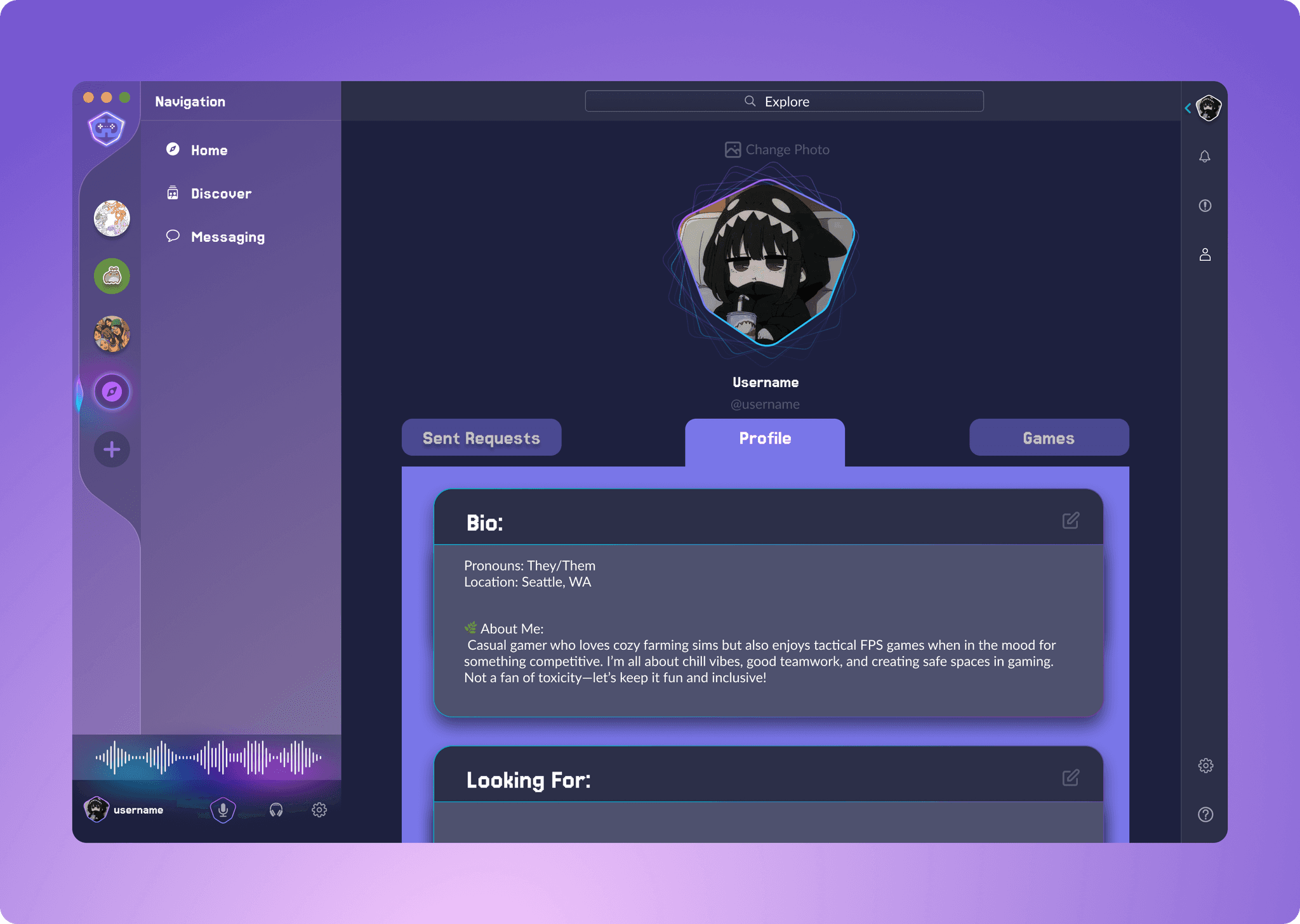
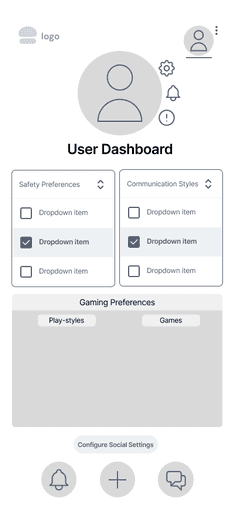
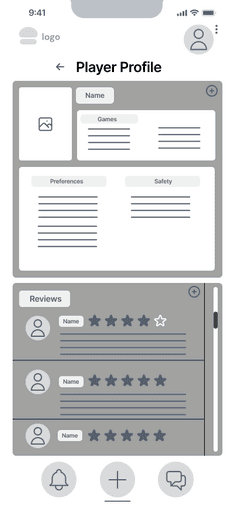
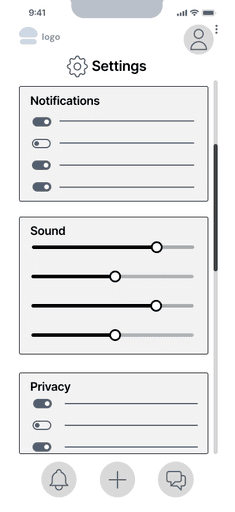
User Profiles & Social Compatibility Settings – Players set their gaming preferences, safety concerns, and playstyles to match with the right groups.
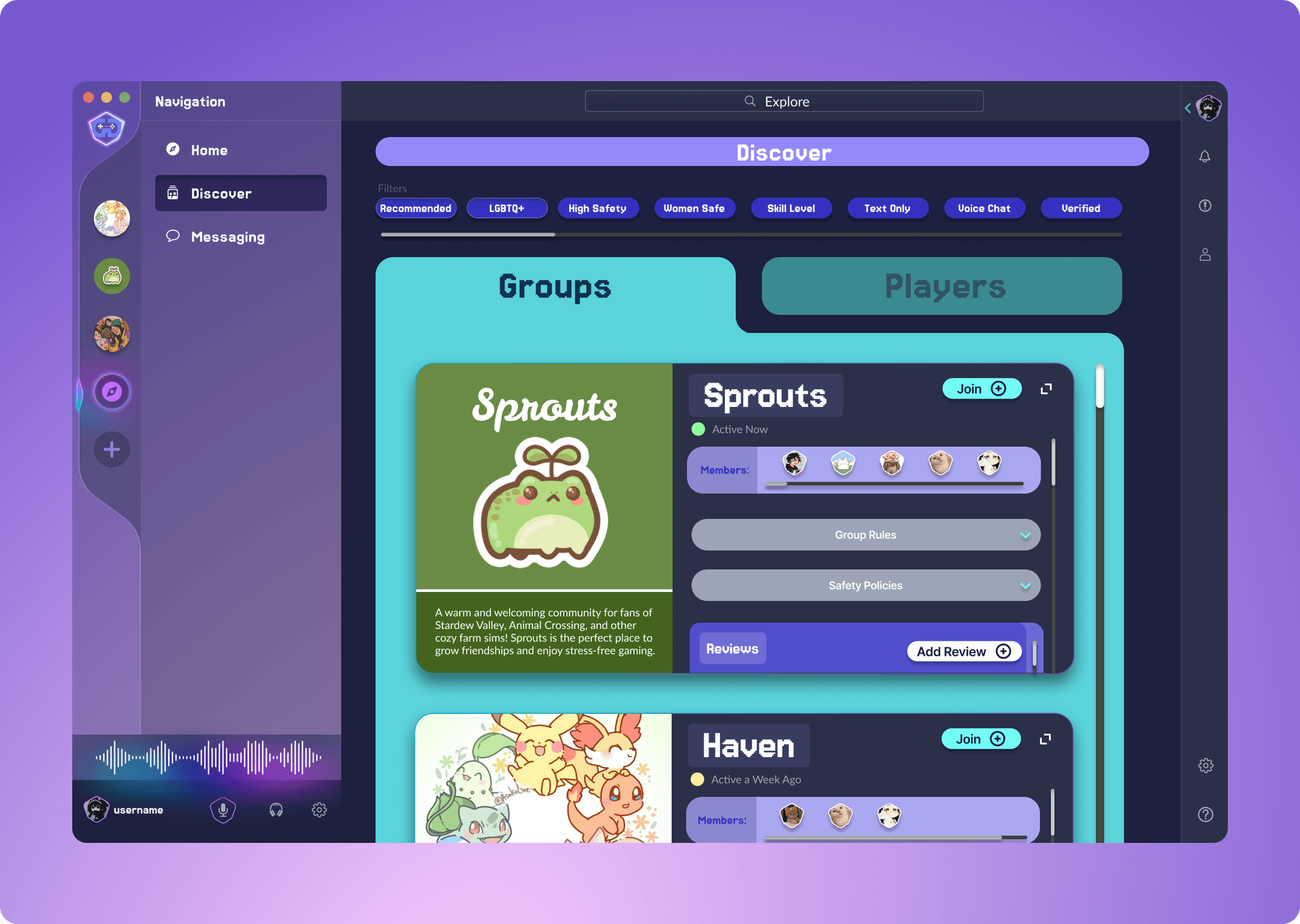
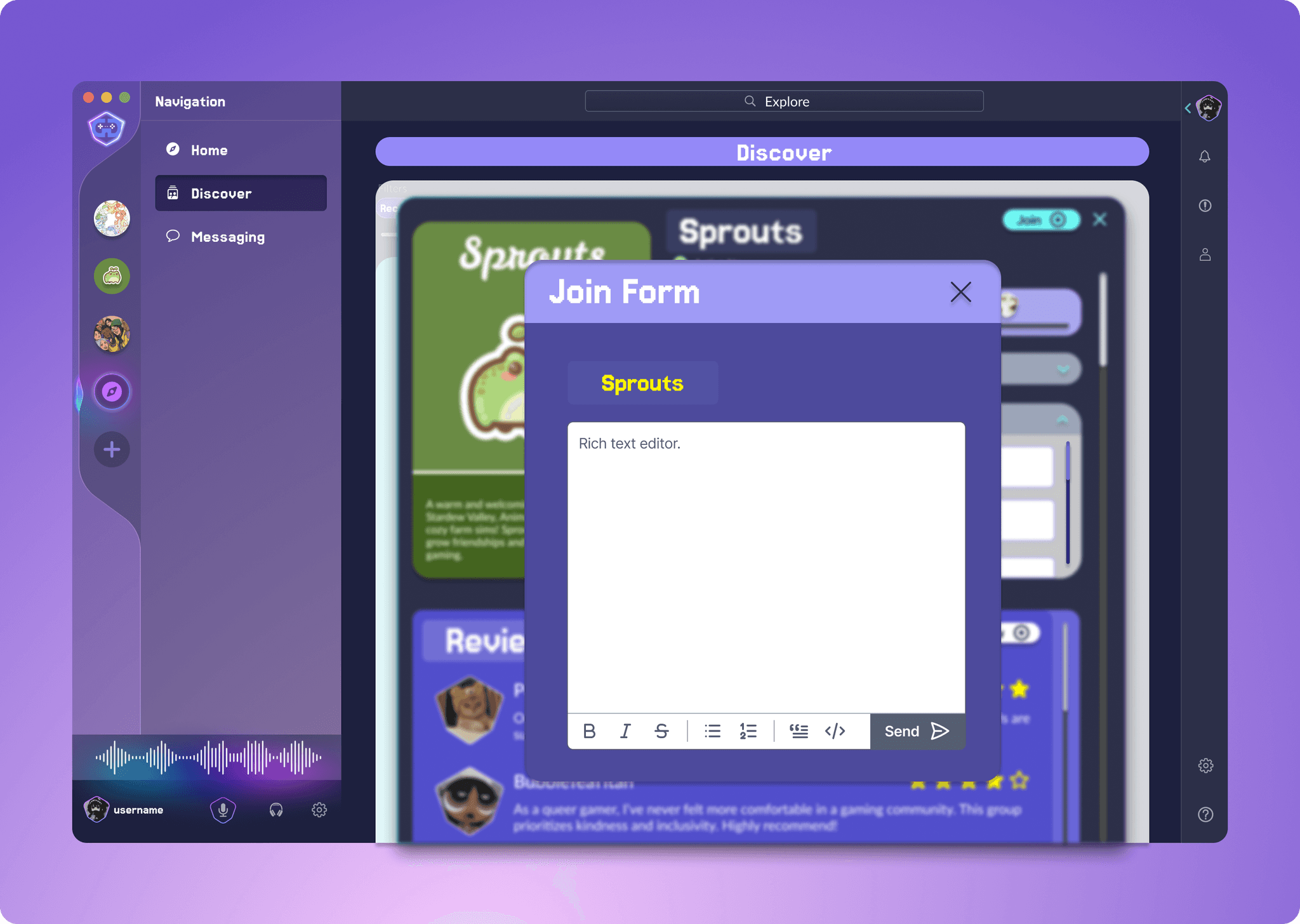
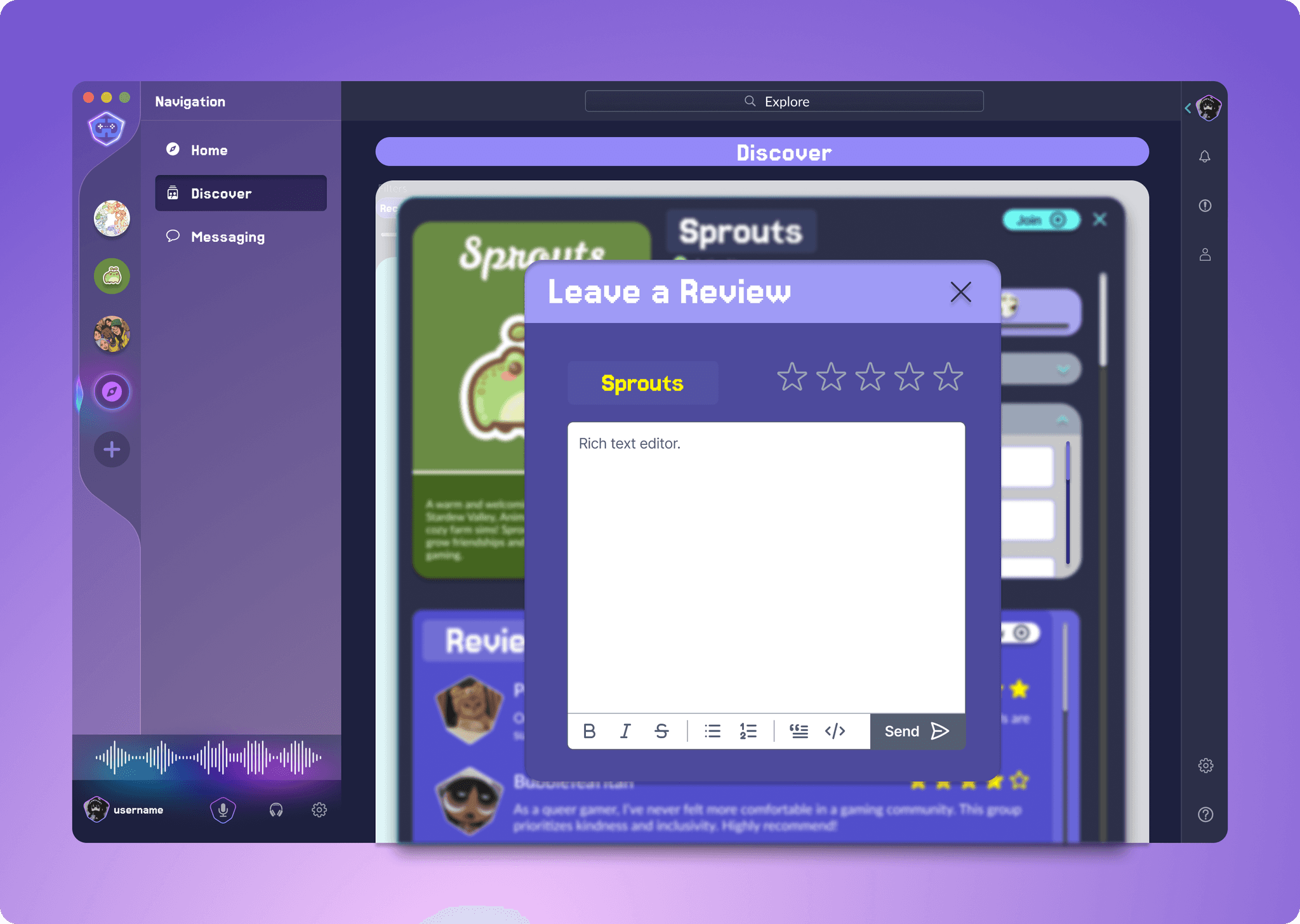
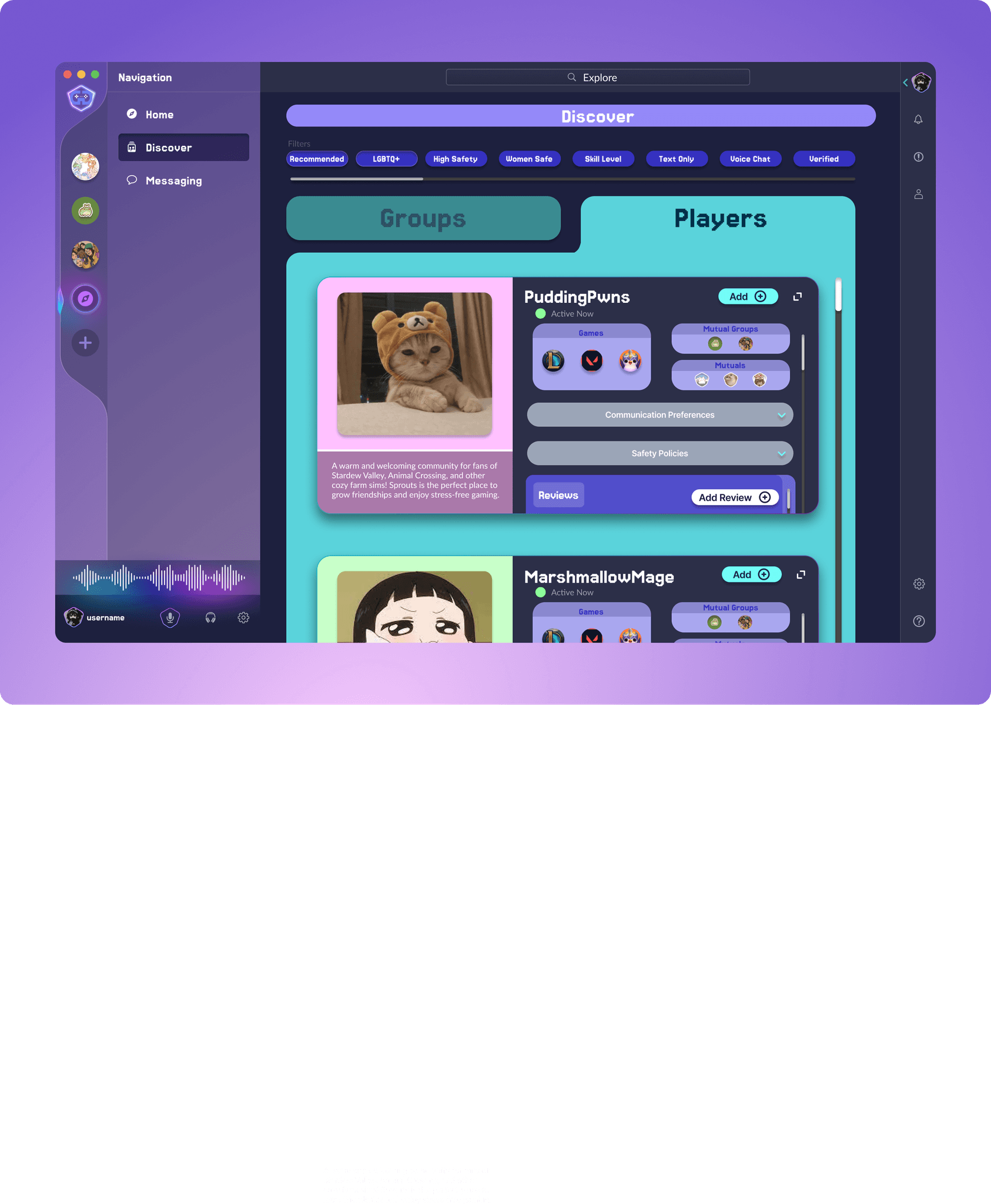
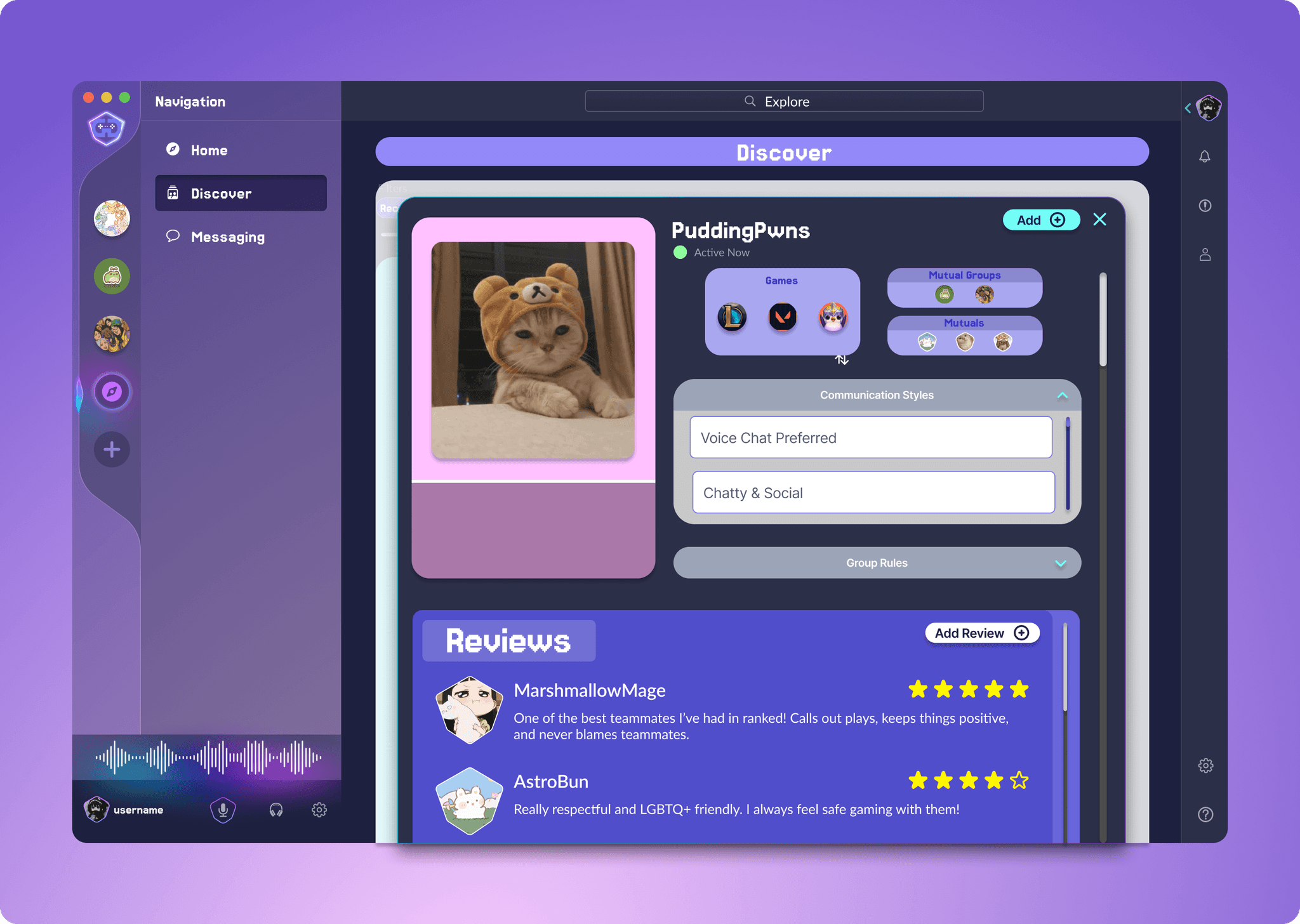
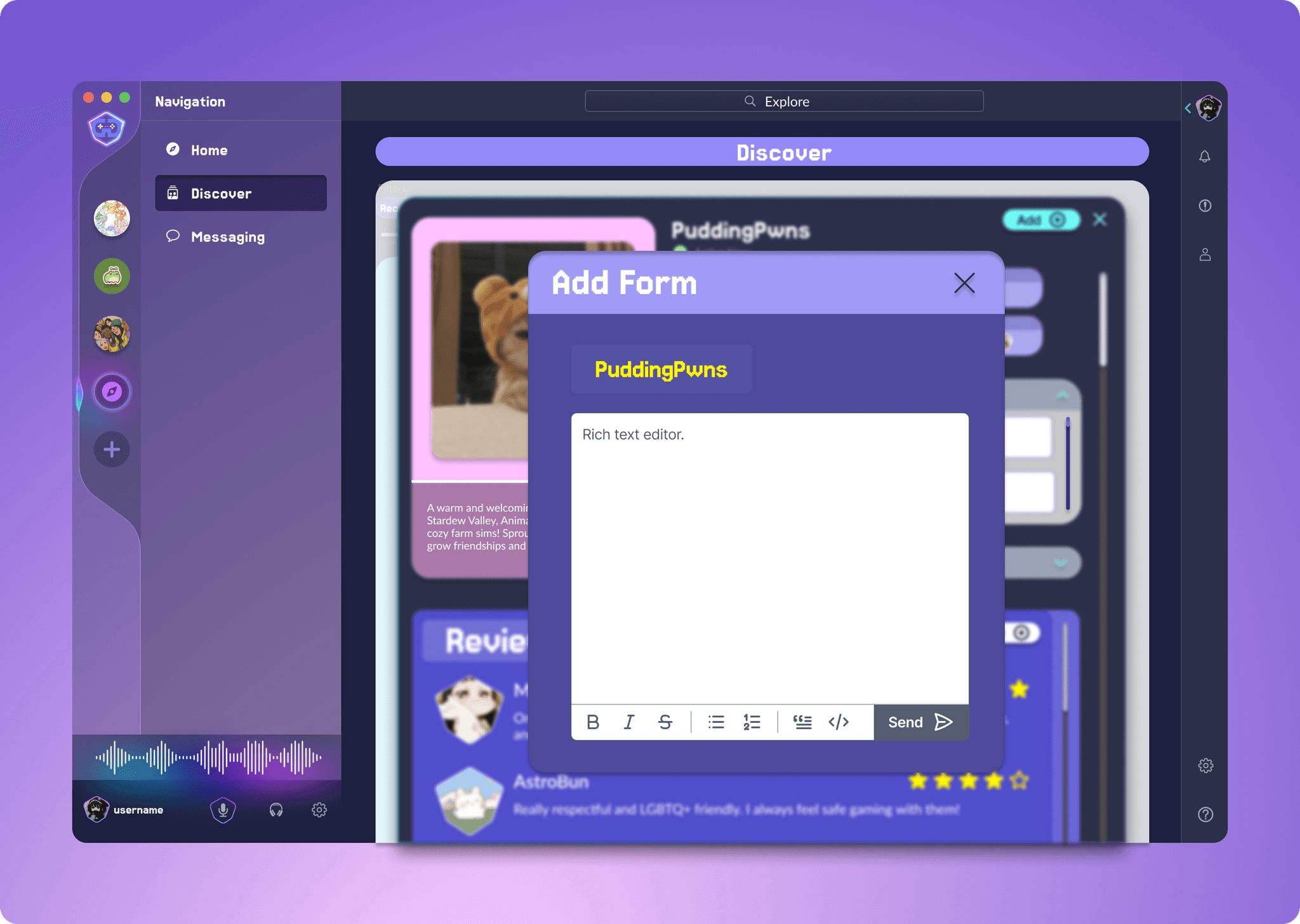
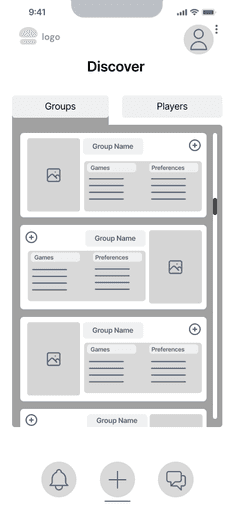
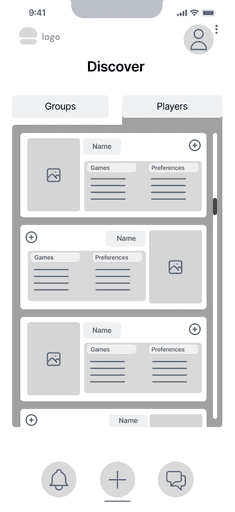
Discover Page – A streamlined way to find gaming groups and players based on filters like game type, playstyle, and community values.
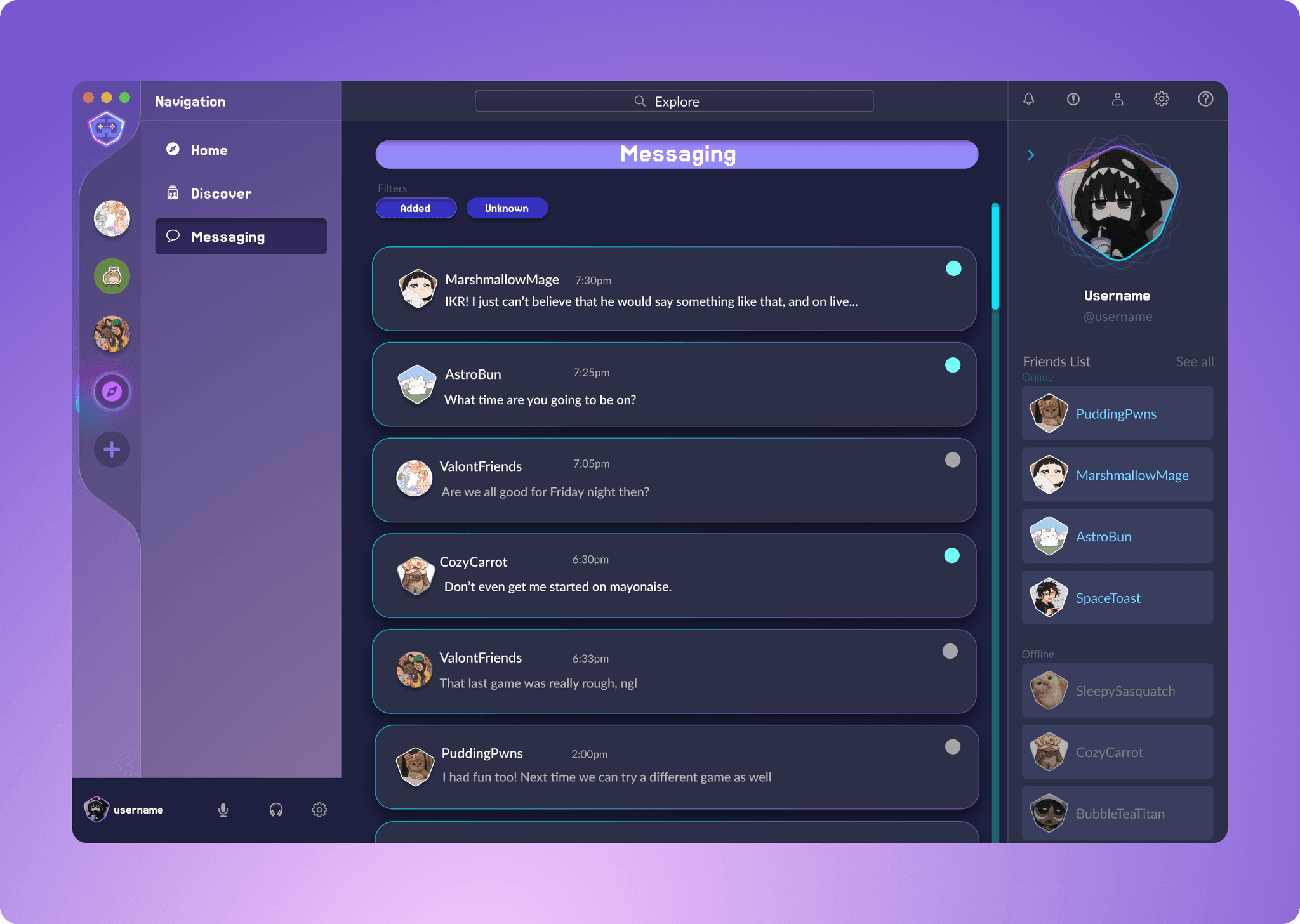
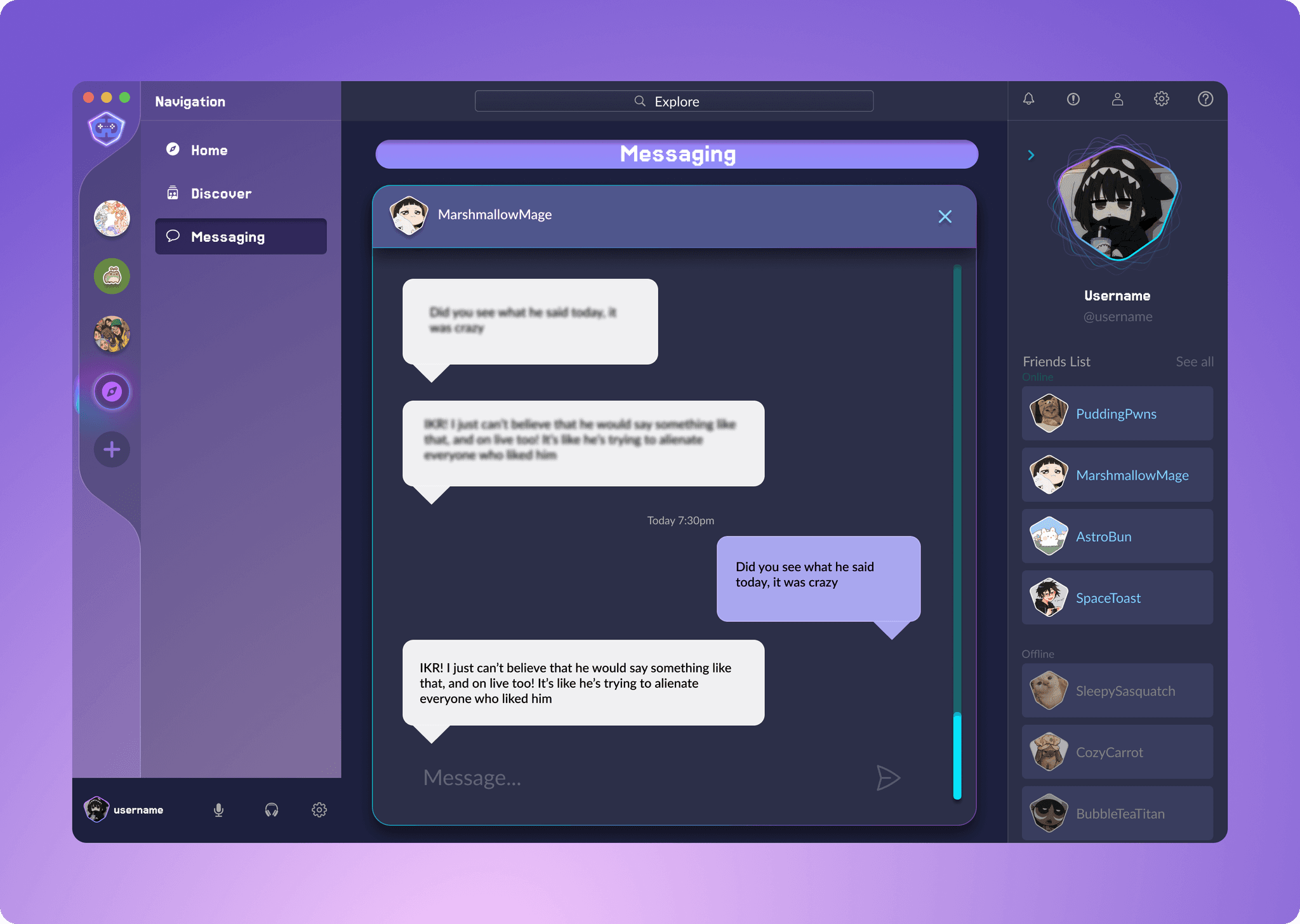
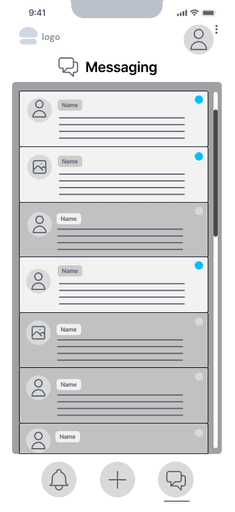
Messaging & Group Features – A built-in chat system with moderation tools to create a safe space for conversations.
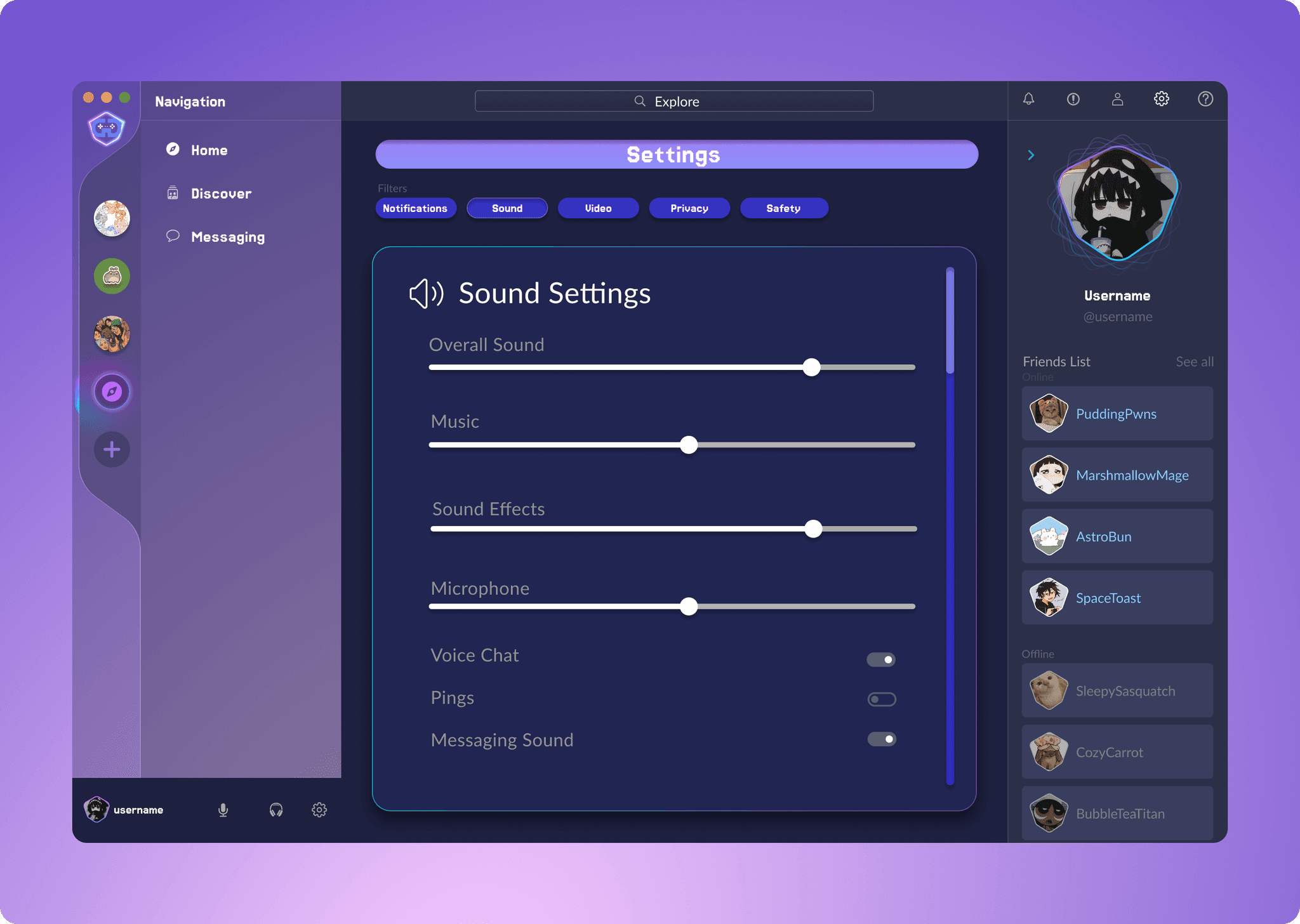
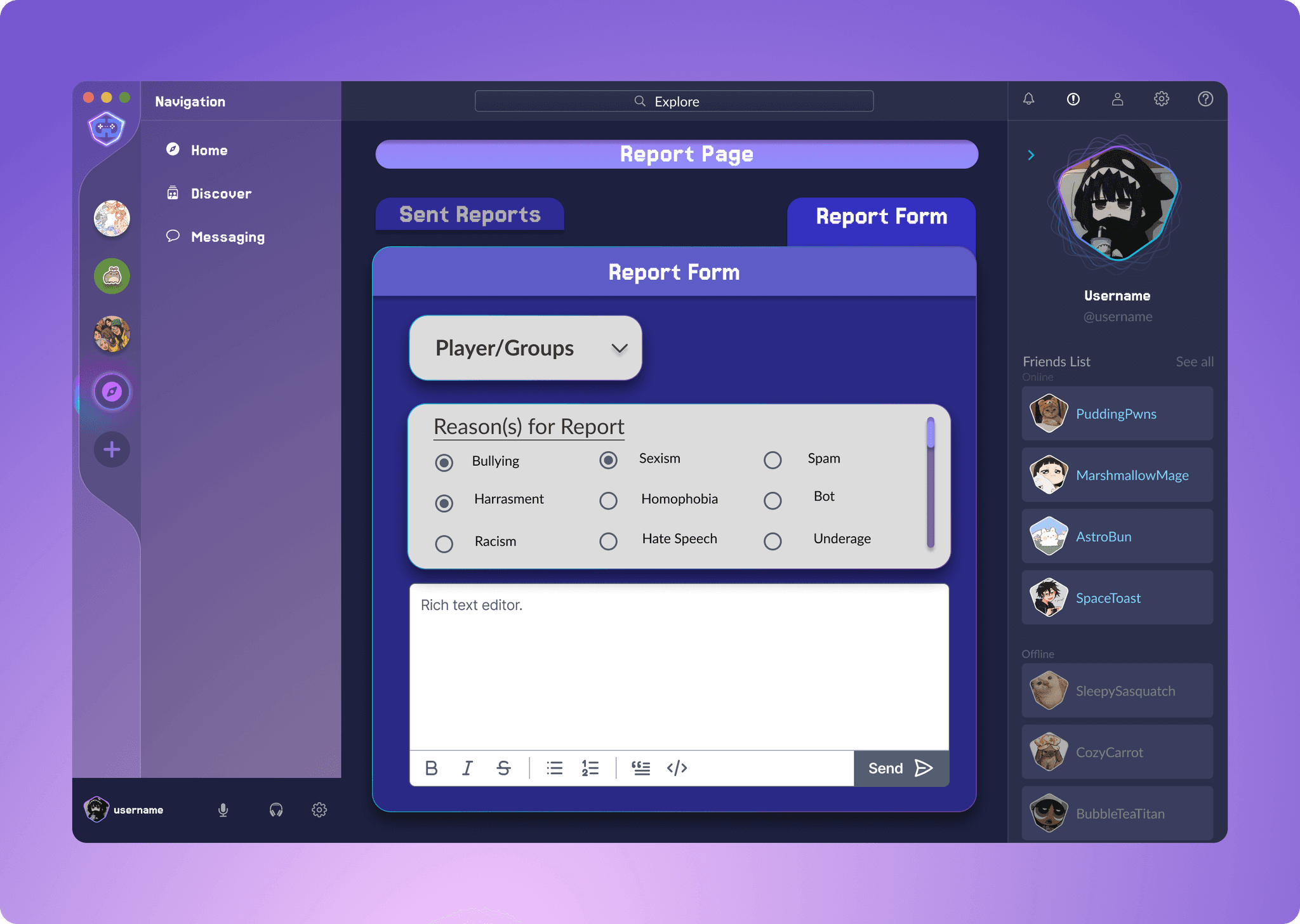
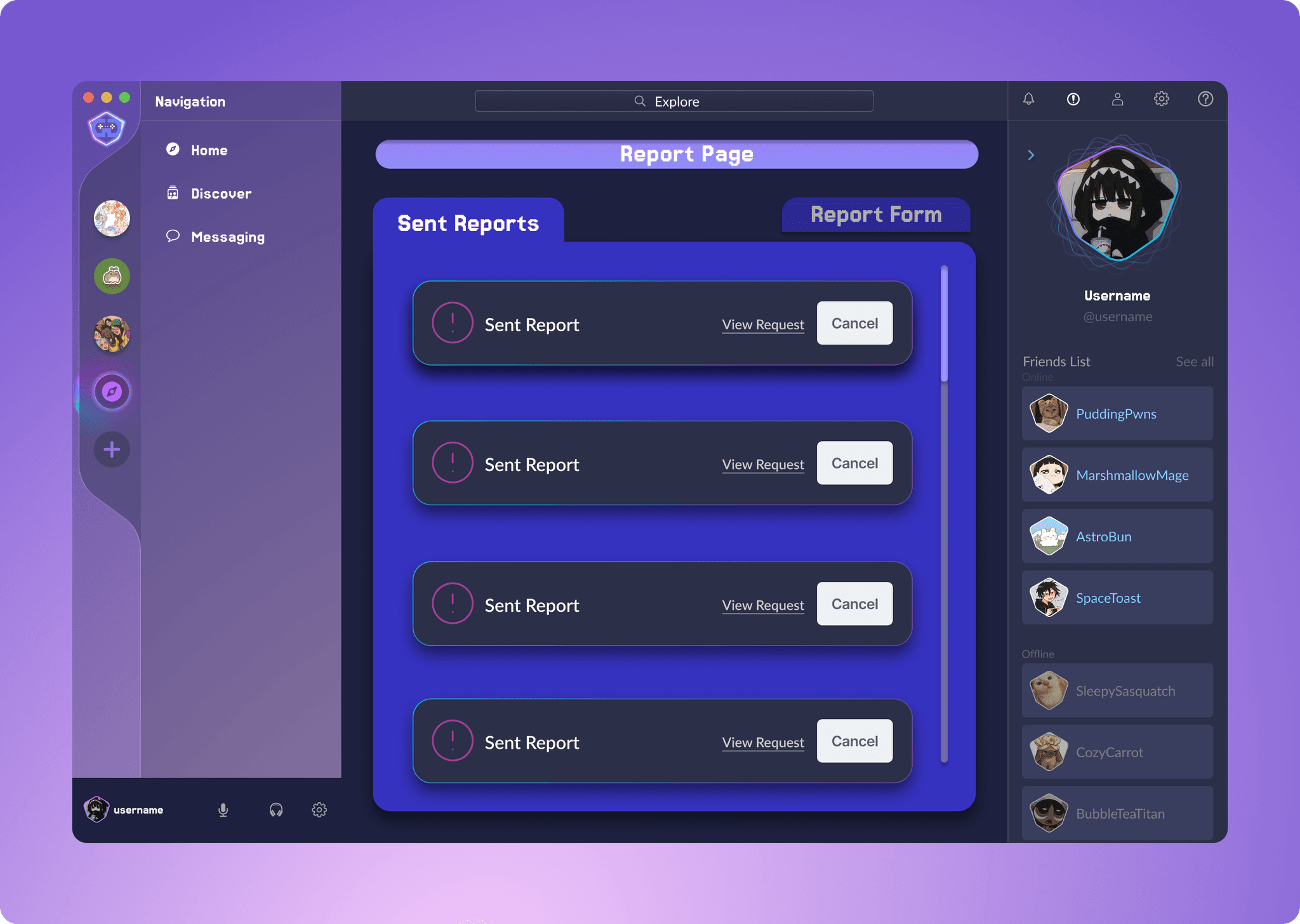
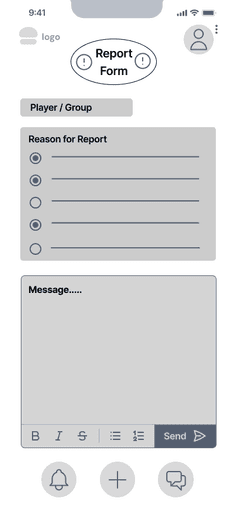
Safety & Moderation – Users can report, block, and customize their communication settings for added protection.
Platform Structure:
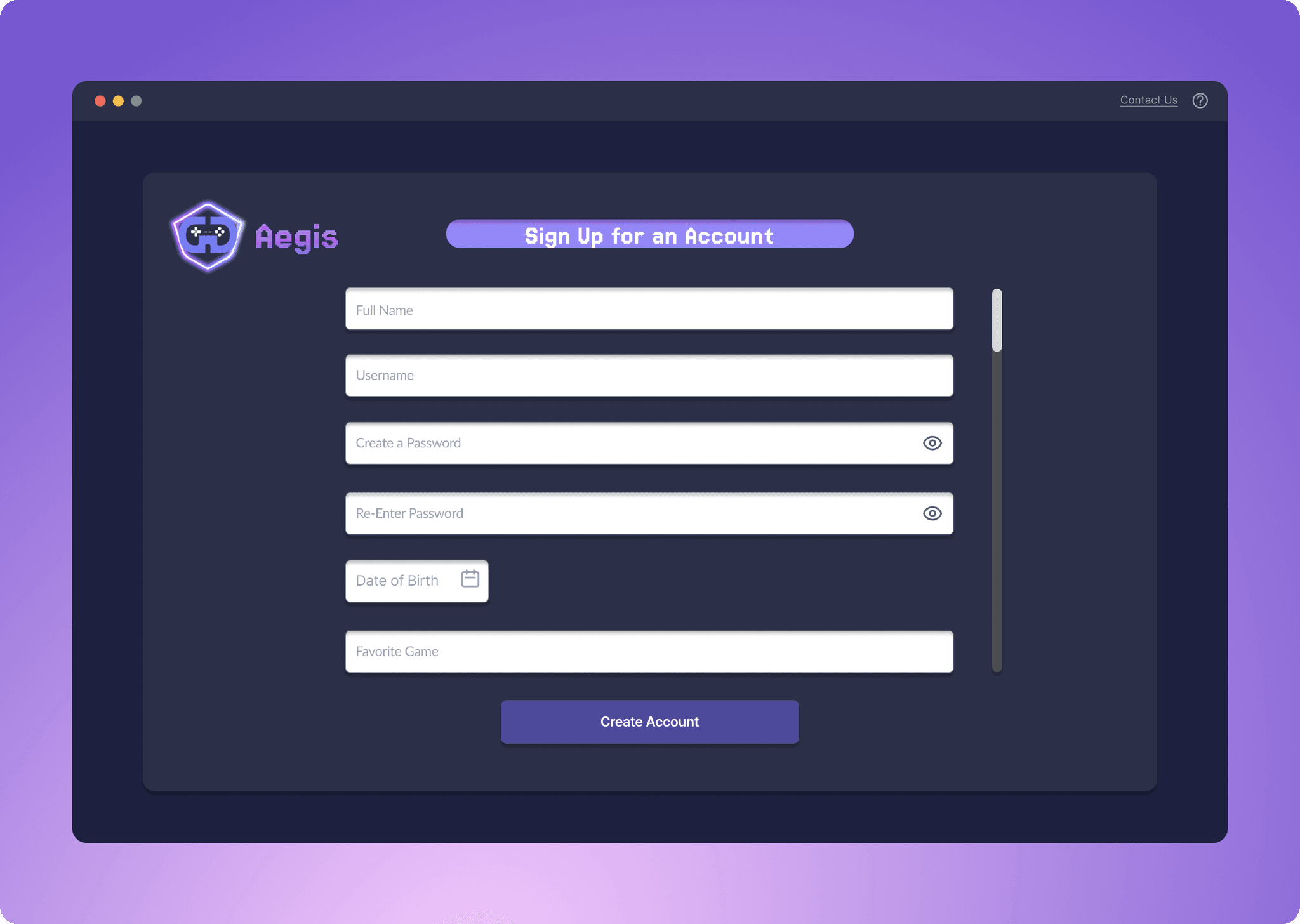
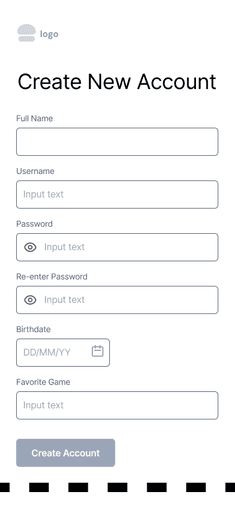
Sign-up & Onboarding – Users set up their account and select safety preferences.
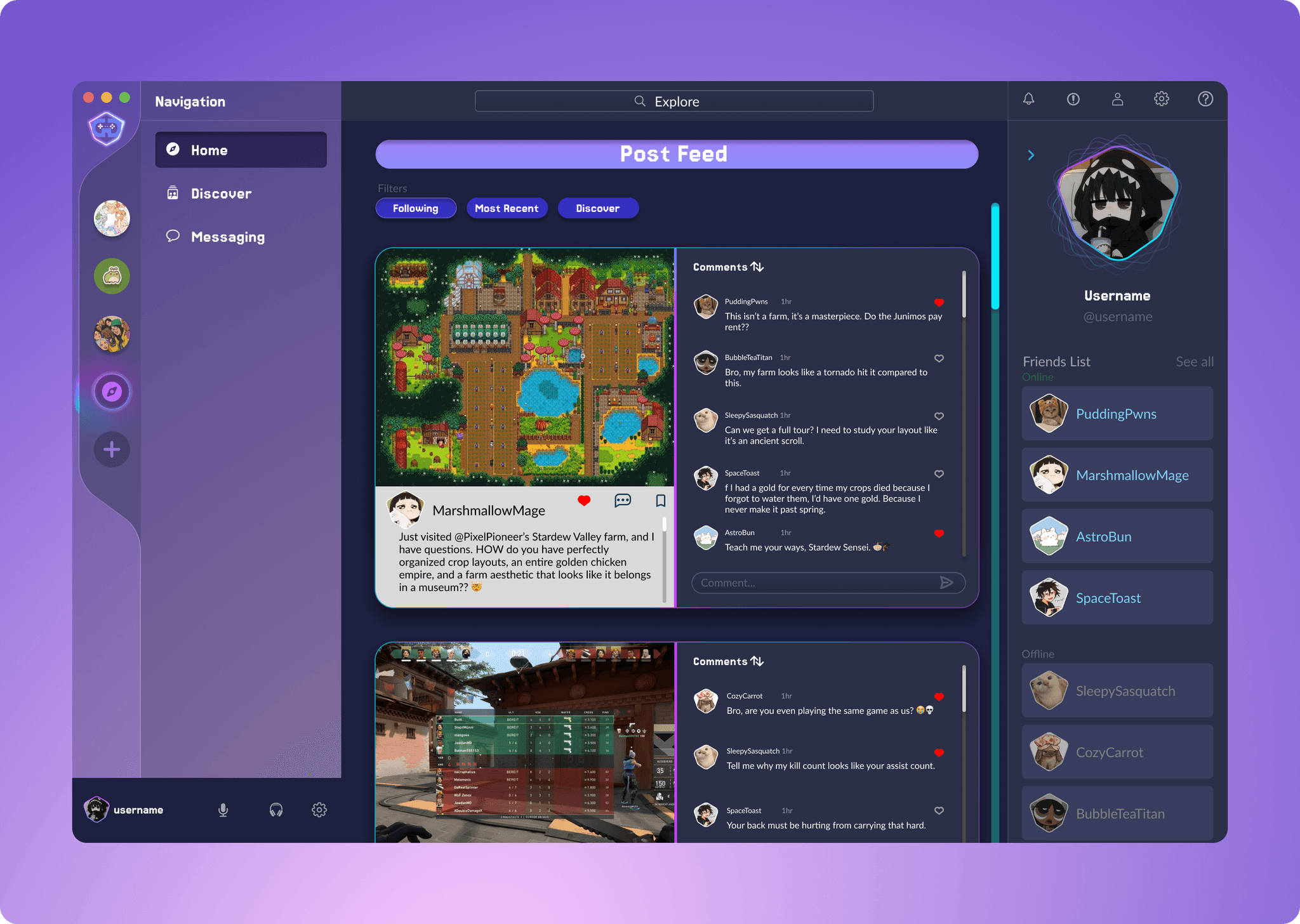
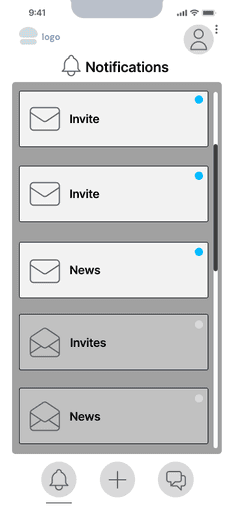
Dashboard – Central hub for accessing social compatibility settings, notifications, and messaging.
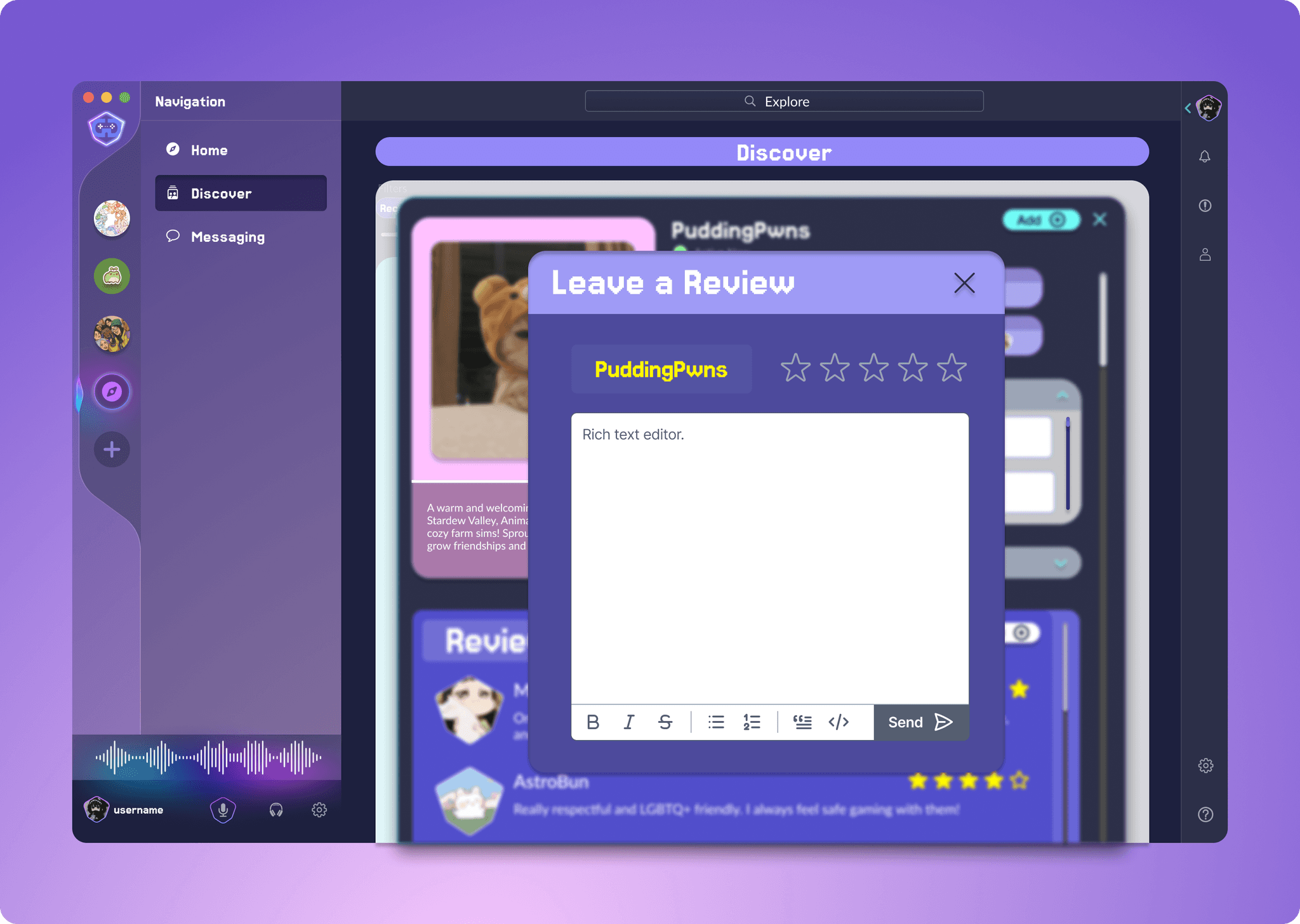
Discover Page – Players and groups are recommended based on shared gaming and social preferences.
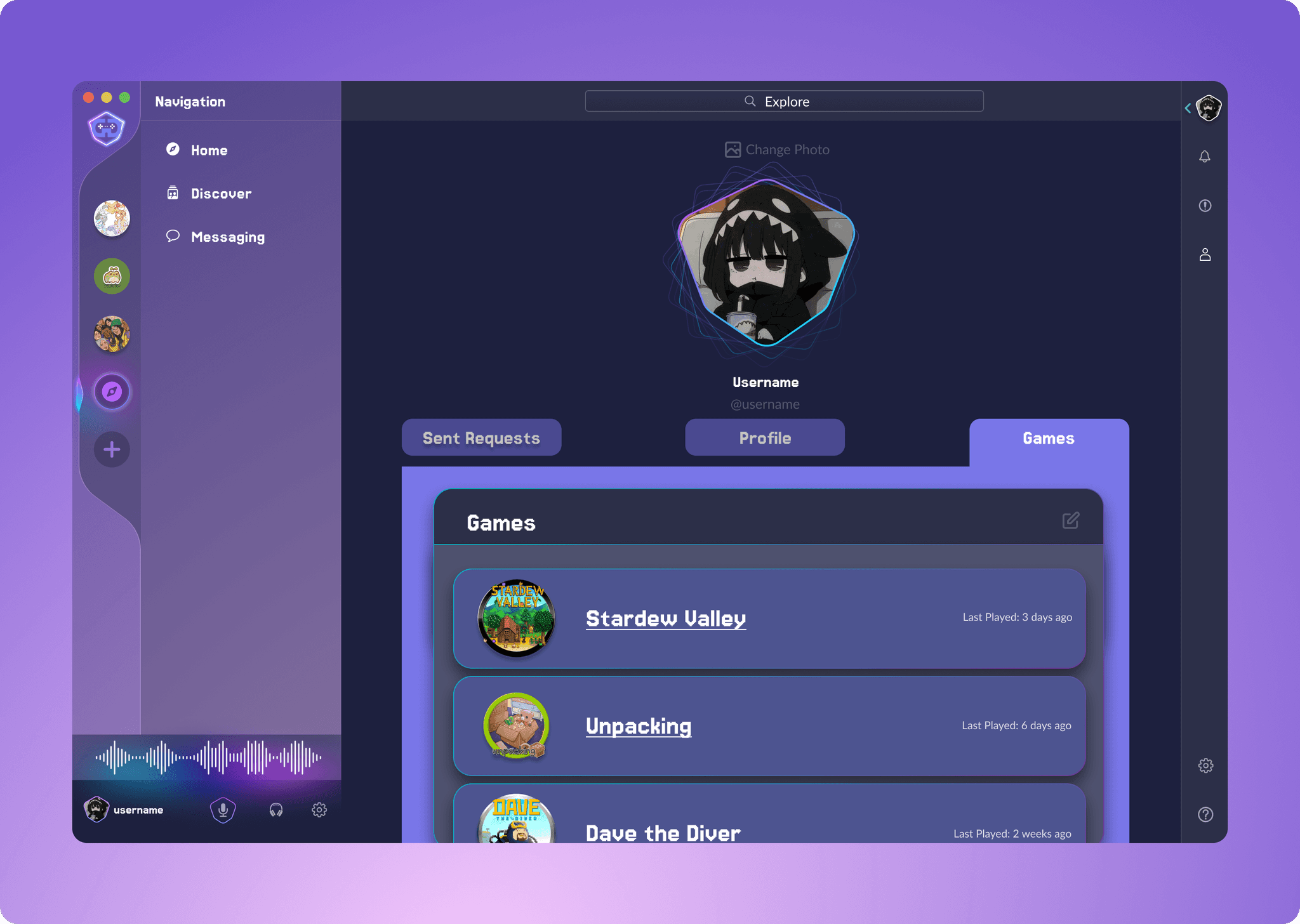
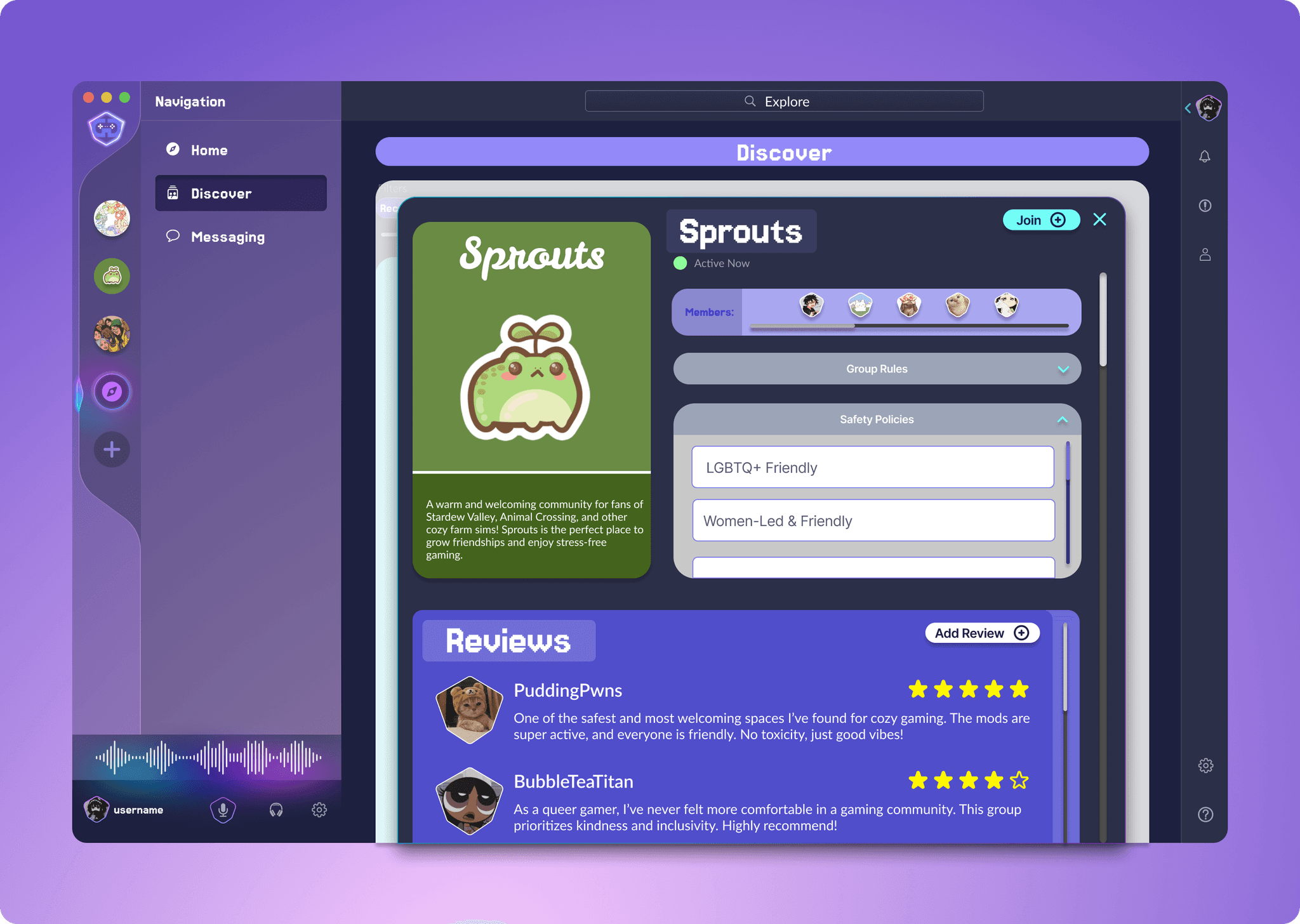
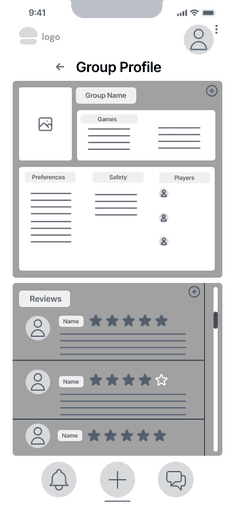
Group & Player Profiles – Users can view detailed community rules, past reviews, and moderation settings before joining.
Messaging & Moderation – Players can chat with teammates while having tools to block, report, or mute when needed.
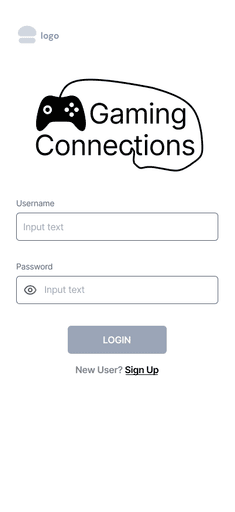
I created paper prototypes to test basic layouts before refining them into digital wireframes (low-fidelity and high-fidelity) in Figma.
To refine the design, I conducted lo-fidelity prototype testing, which helped uncover usability issues.
Key Refinements:
Issue: Users couldn’t tell if a group was active or inactive.
Fix: Added an “Active Now” badge and Last Active timestamp to group profiles.
Issue: The navigation bar felt cluttered.
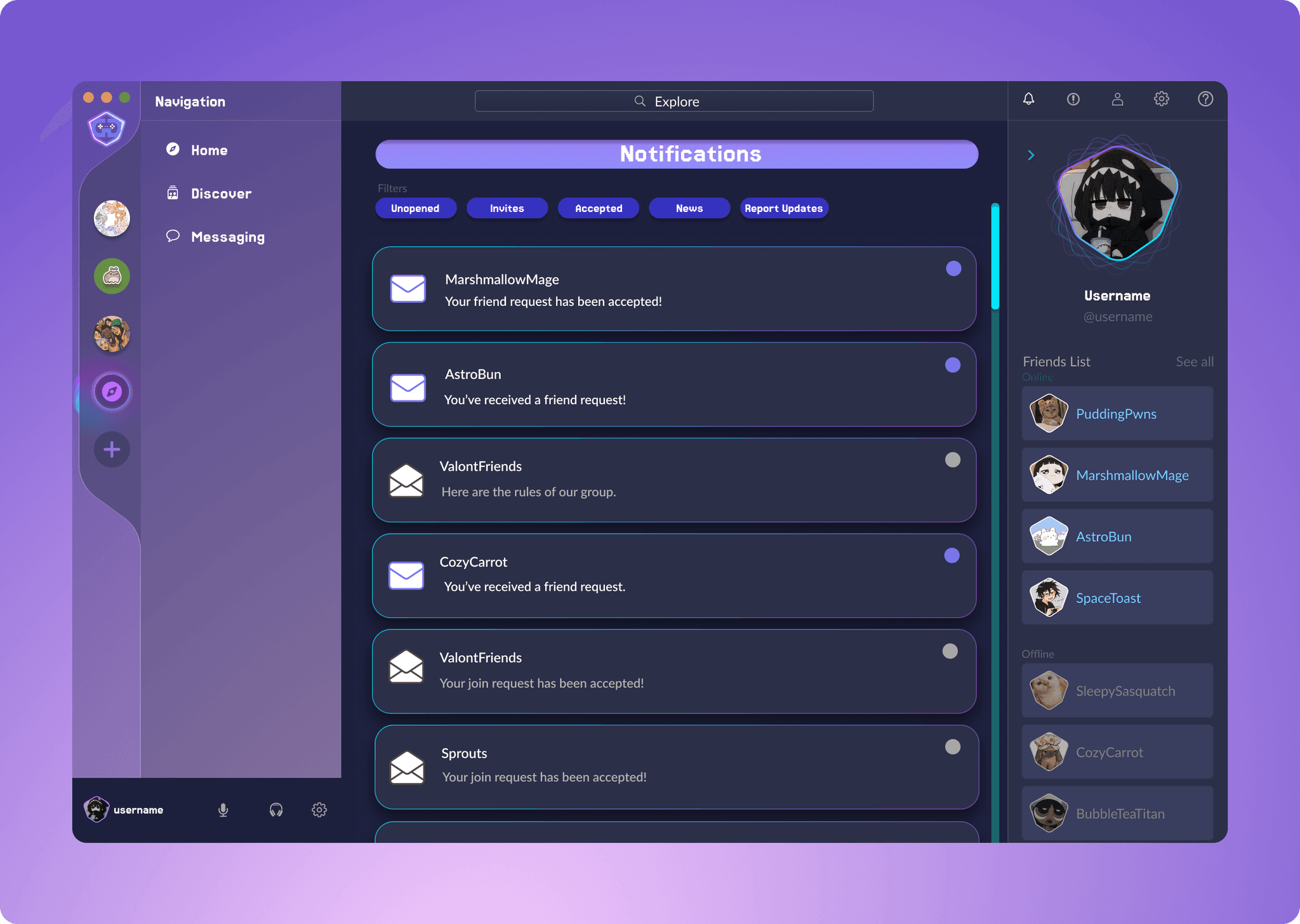
Fix: Moved notifications and reporting features into the user dashboard for a cleaner interface.
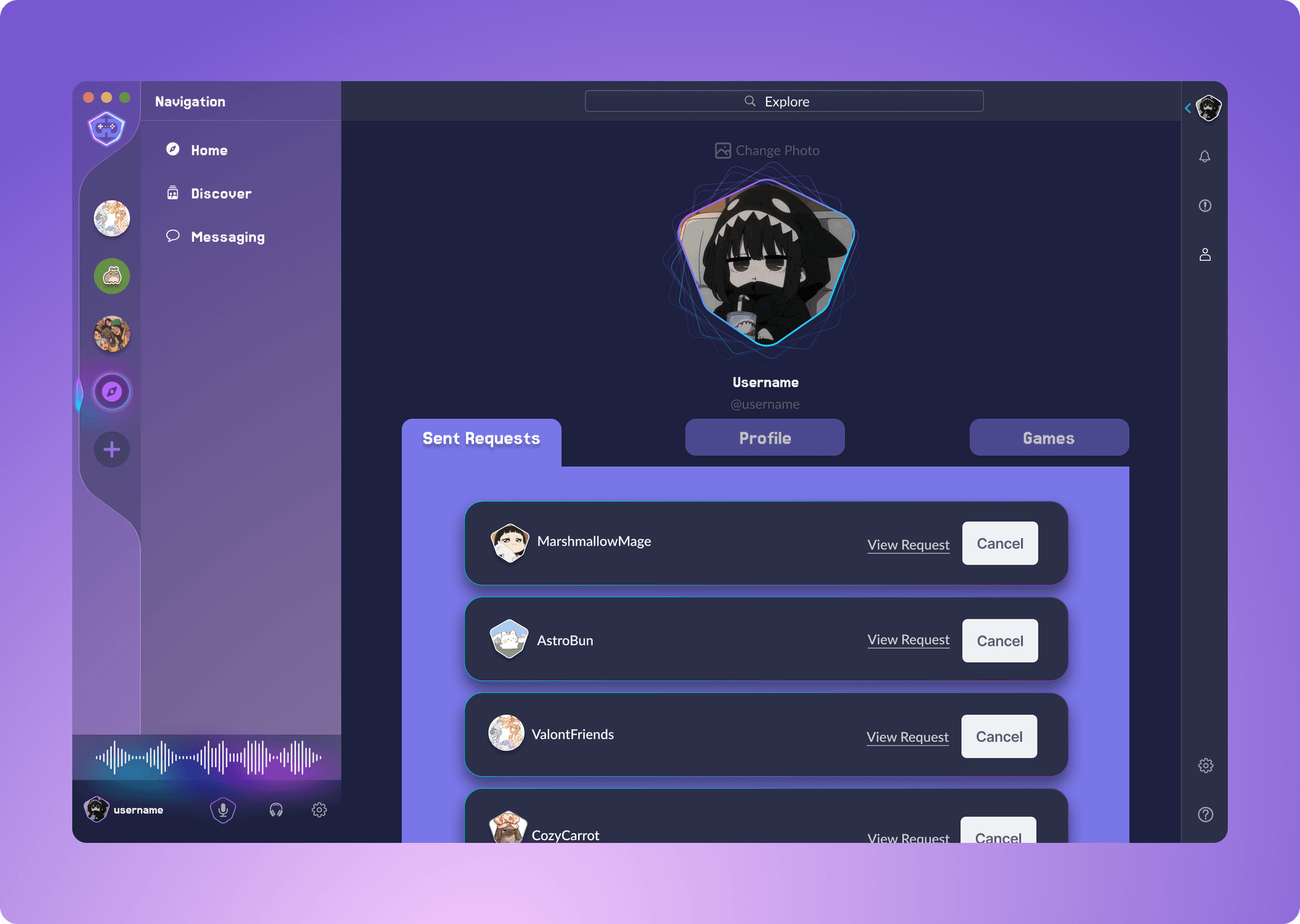
Issue: No way to track or cancel join requests.
Fix: Introduced a “Join Requests” page, allowing users to see pending, accepted, and rejected requests.
These refinements made the platform feel more intuitive, accessible, and user-friendly.
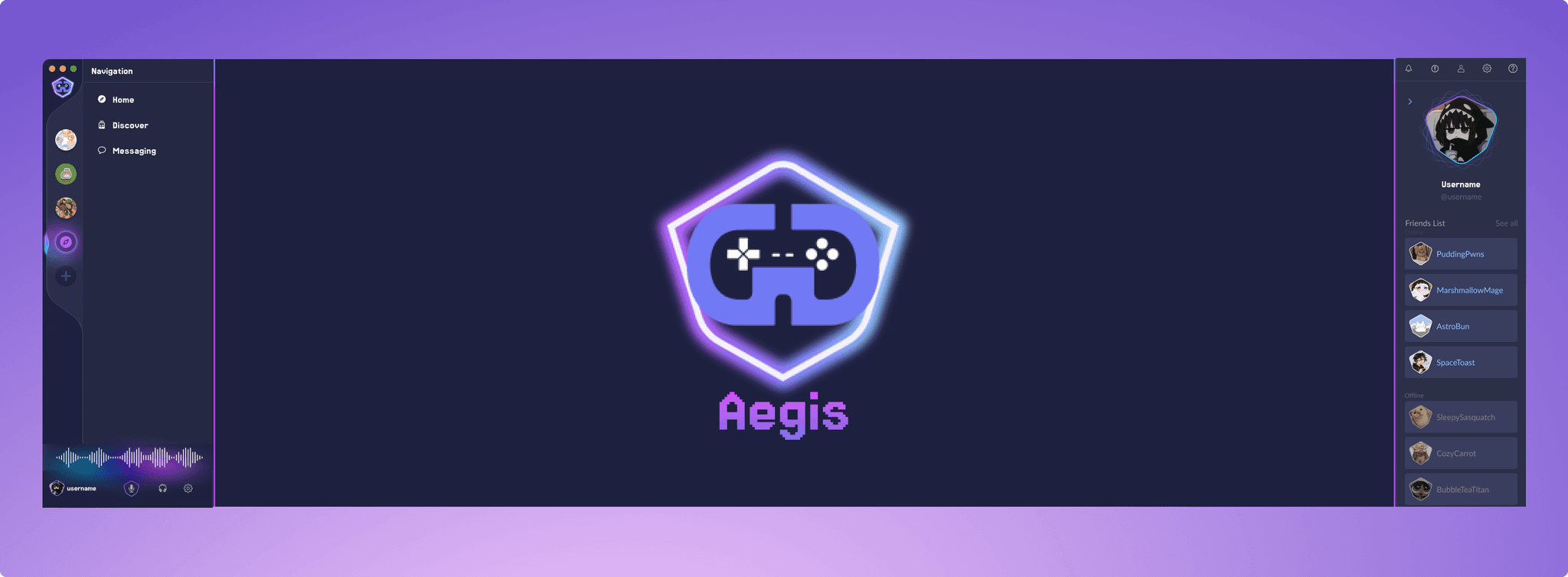
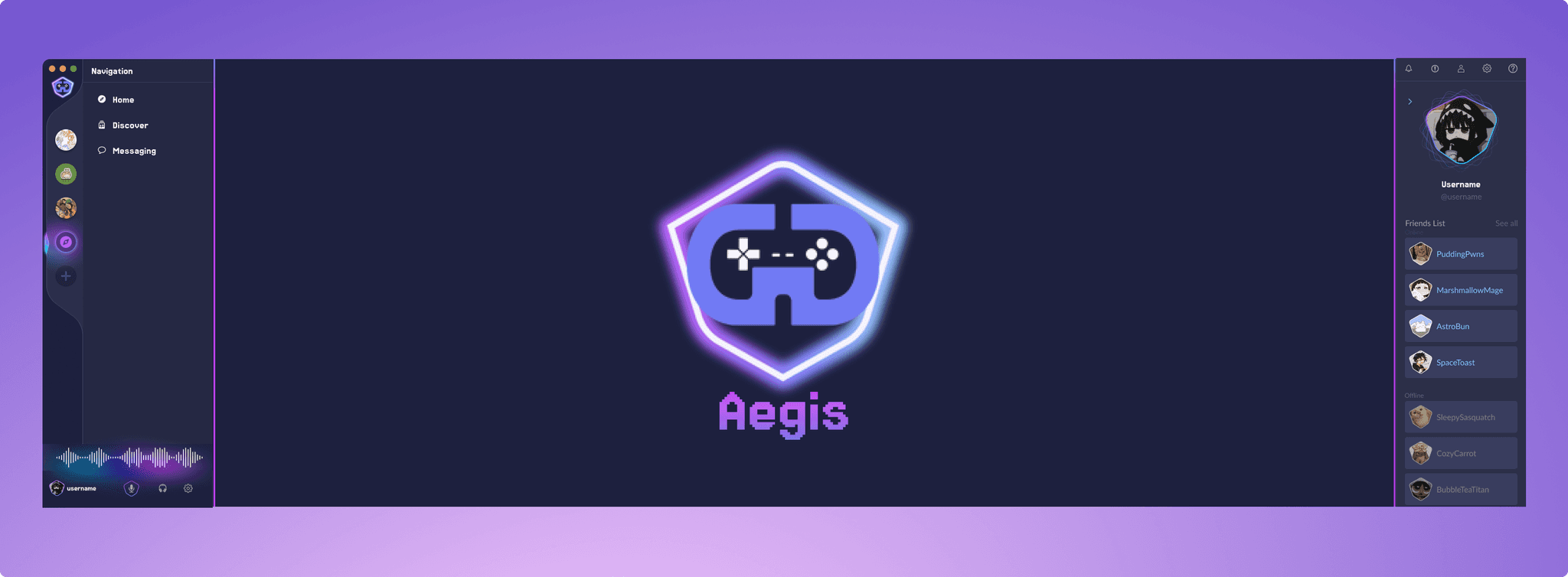
The high-fidelity prototype of Aegis represents the final design of the platform. It includes:
A polished, modern UI with accessibility considerations for readability and usability.
Fully functional interactions for profile creation, group discovery, messaging, and moderation tools.
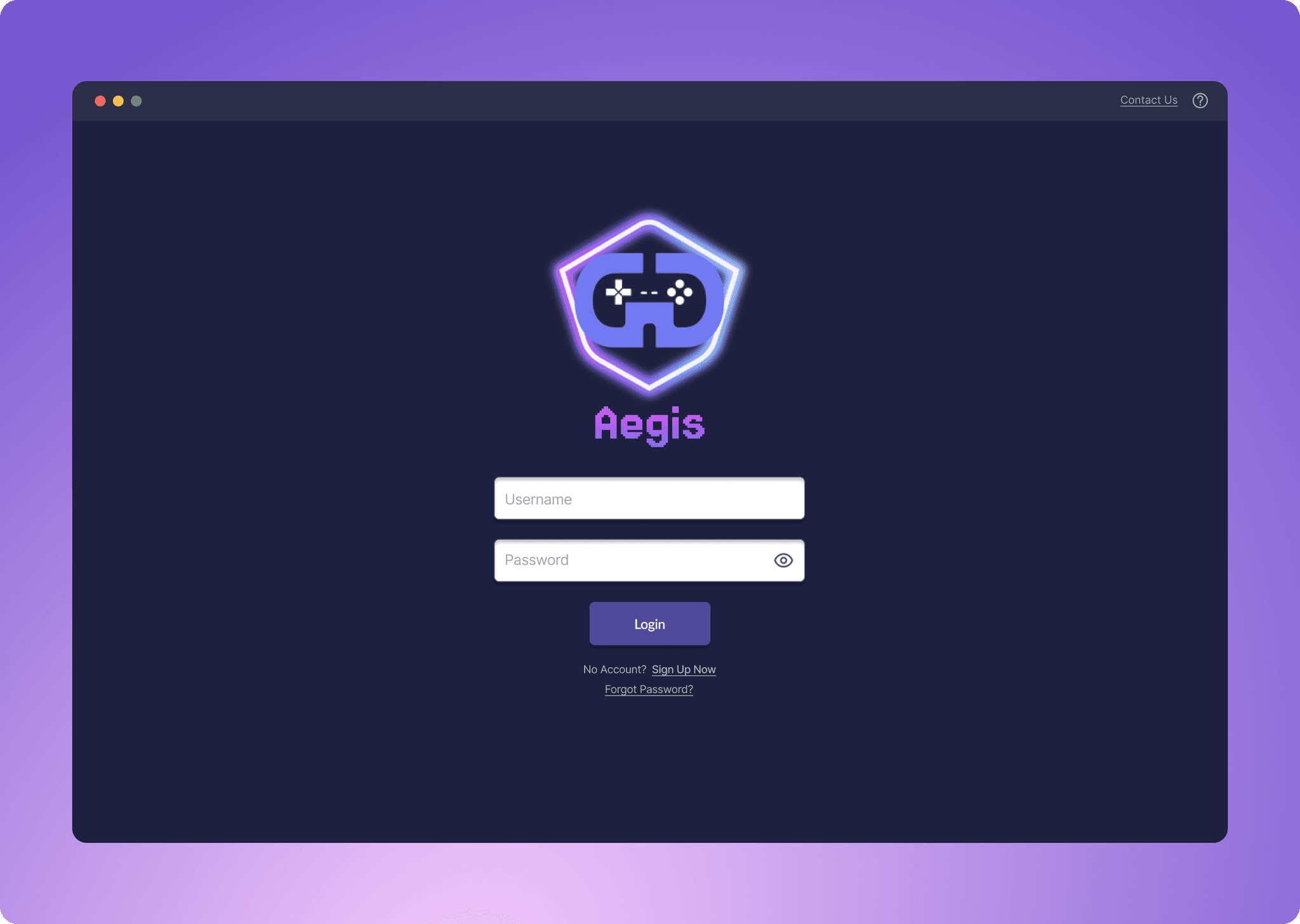
A streamlined onboarding process that helps users quickly set preferences and find compatible groups.
User Interviews
I interviewed two individuals from the target demographic:
Participant 1: A 24-year-old queer Asian American woman who plays RPGs and cozy games. She avoids voice chat due to past harassment and finds large Discord servers overwhelming.
Participant 2: A 27-year-old bisexual white nonbinary gamer who plays competitive multiplayer games. They use Discord but feel it doesn’t help them find compatible teammates.
Key Themes from Interviews
Safety & Respect Are Critical – Both participants reported experiencing toxicity in online games, making them hesitant to engage with new players. They prioritize safety tools like reporting, blocking, and moderation.
Social Compatibility > Skill Matching – Players care more about finding like-minded teammates than being paired based on skill level. They want matchmaking based on values, playstyle, and communication preferences.
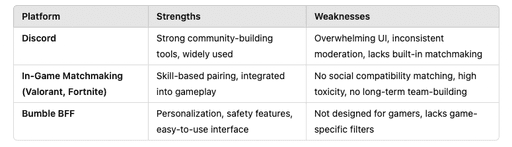
Existing Platforms Aren’t Built for Community Discovery – Discord is useful for staying in touch with existing friends, but not for meeting new people. In-game matchmaking lacks tools to foster long-term connections.
Toxicity Is a Barrier to Gaming – Both participants feel that current reporting systems don’t work and that many online spaces don’t feel welcoming.
Competitive Analysis
I analyzed three platforms to understand their strengths and weaknesses:
Inclusivity and accessibility must be built in from the start. If users don’t feel safe, they won’t engage. Safety features must be visible and easy to use.
User control is key. Giving users control over who they interact with and how they engage improves trust and usability.
Iteration makes a huge difference. Small refinements—like clarifying navigation, tracking group activity, and improving messaging clarity—significantly improved the user experience.
Solo projects require structured decision-making. Since I worked on Aegis alone, I had to prioritize features carefully and ensure that every decision was backed by research.
Aegis is a user-centered solution that provides a safer, more inclusive way for players to connect with like-minded communities. By prioritizing social compatibility over skill-based matchmaking, it fosters meaningful, respectful interactions.
With the high-fidelity prototype completed, my focus now is on final refinements and preparing for my portfolio presentation in the next two weeks.